- A new browser project is gaining attention in the developer community for one specific reason — it is not built on Chromium or Firefox technologies.
- Ladybird Browser is being developed as a fully independent web browser, including its own rendering engine created from scratch.
- The project is open source and has already attracted strong interest, crossing more than 59,000 stars on GitHub.
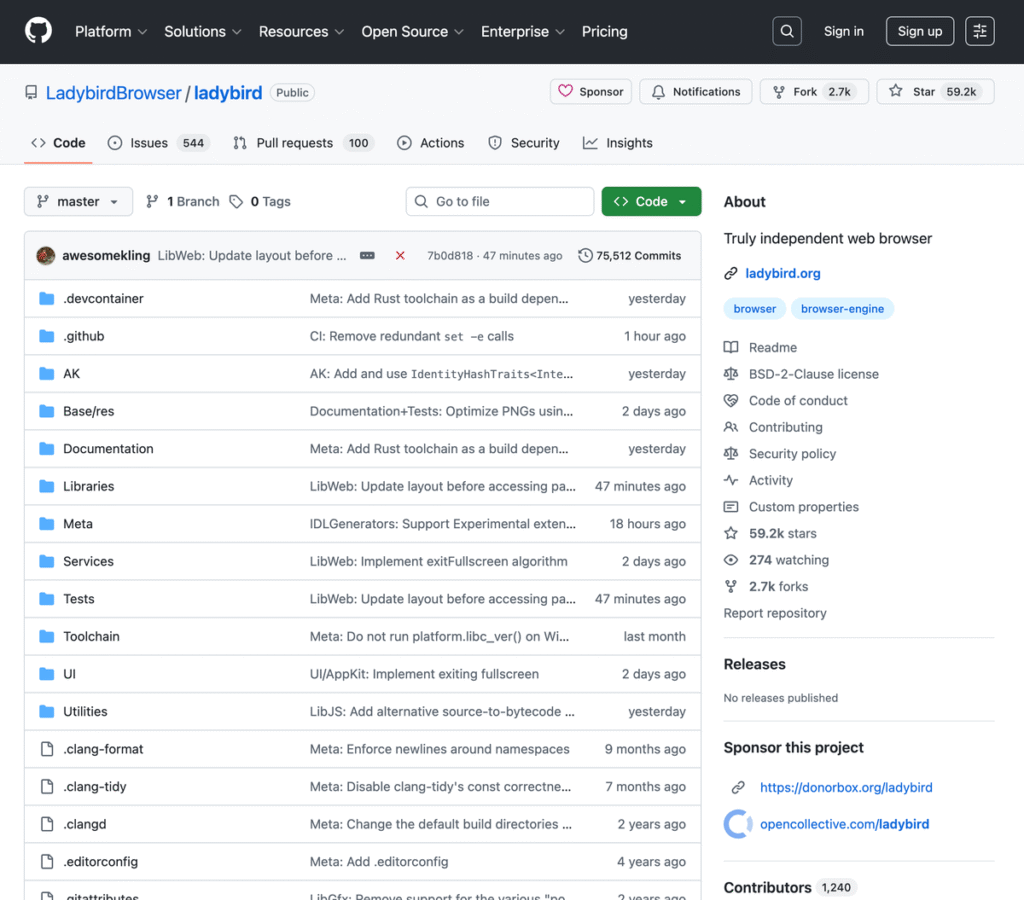
This signals growing demand for alternatives to the current browser ecosystem dominated by Chromium-based platforms.
• Built without Chromium or Gecko foundations
Most modern browsers rely on Chromium, while a smaller group uses Mozilla’s Gecko engine.
Ladybird takes a different route:
- Uses a completely original engine
- No reuse of Chrome or Firefox core technologies
- Designed to reduce dependence on large tech platform ecosystems
This approach aims to increase diversity in how web standards are implemented.
• Engine developed from scratch in C++
The core of Ladybird is written in C++, with a focus on performance and long-term maintainability.
Key technical direction:
- Independent rendering pipeline
- Custom layout and JavaScript execution components
- Architecture built for modern web compatibility rather than legacy constraints
Developers see this as important because browser engines shape how the web evolves.
• Open source and community-driven development
Ladybird is positioned as a collaborative project rather than a corporate browser release.
What this means:
- Source code is publicly available
- Contributors can participate in engine development
- Transparency around how features are implemented
This model allows experimentation without commercial platform priorities influencing decisions.
• Why is interest growing now
Chromium currently powers a large portion of the web — including Chrome, Edge, Brave, Opera, and many others.
That concentration creates concerns around:
- Reduced engine diversity
- Web standards are increasingly optimized for one platform
- Developers building primarily for Chromium behaviour
Projects like Ladybird represent an attempt to rebalance that landscape.
• Early traction signals developer curiosity
The GitHub popularity milestone indicates strong technical interest even before a mainstream release.
🚀 Need a Shopify Store That Converts?
I build fast, clean Shopify stores for DTC brands that want more sales, not just a pretty site.
What the numbers suggest:
- Developers want alternative browser engines
- Curiosity around long-term independence from big tech infrastructure
- Recognition that building a browser engine from scratch is rare
Browser engines are among the most complex software projects, which explains the attention.
• What Ladybird could change if successful
An independent engine could impact multiple areas:
- Testing web compatibility across different engines
- Encouraging broader standards compliance
- Providing research ground for new performance approaches
- Giving users more choice beyond Chromium-based ecosystems
However, building a production-ready browser engine requires significant time, resources, and ongoing maintenance.
• Current status and expectations
Ladybird is still evolving and is not positioned as a mainstream browser replacement yet.
Short-term expectations:
- Continued developer previews
- Expanding compatibility with modern websites
- Gradual performance improvements
- Community contributions shaping direction
Its long-term impact will depend on whether it can achieve stability and widespread adoption.