OpenAI has rolled out a dedicated Translate experience inside ChatGPT, expanding the tool’s role from conversations and content creation into everyday language translation. The feature supports translation across 47 languages, positioning ChatGPT as a flexible alternative to traditional translation apps for study, travel, and professional use.
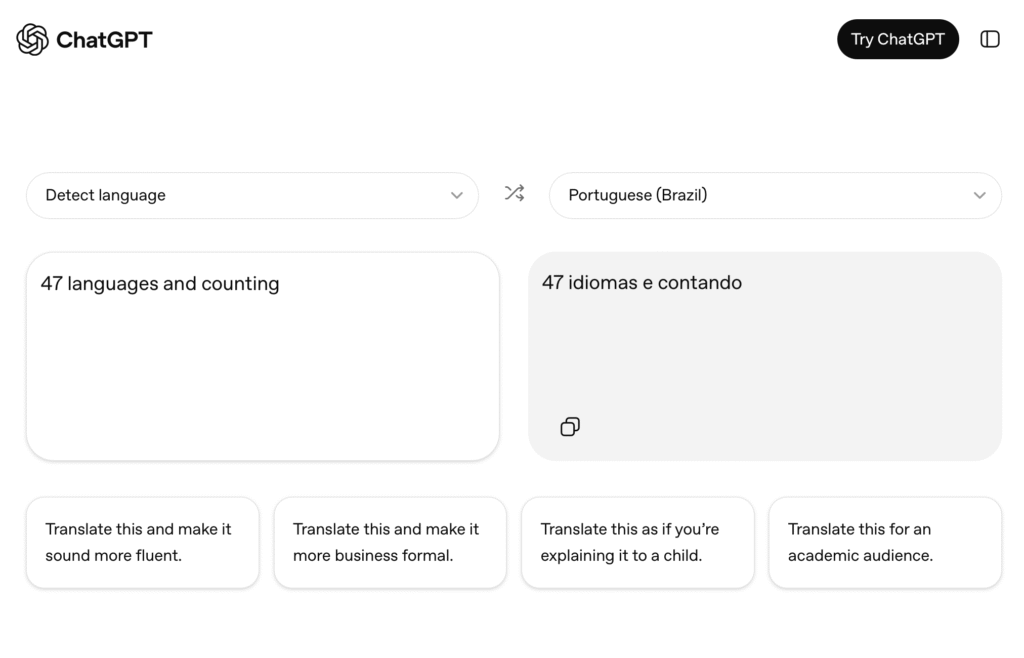
Unlike basic word-for-word translators, this update focuses on context, tone, and intent, making translations feel more natural and situationally accurate.
What the new Translate feature supports
ChatGPT’s translation capabilities now extend beyond plain text input.
- Translate across 40+ major global languages
- Convert between English, Spanish, Japanese, Arabic, and many others
- Preserve meaning, nuance, and intent, not just literal phrasing
- Request multiple versions of the same translation for clarity or fit
The feature is available directly inside ChatGPT without switching tools or modes.
More control over tone and writing style
One of the biggest advantages of using ChatGPT for translation is flexibility.
Users can fine-tune how translations sound by requesting:
- Formal or professional language
- Casual or conversational phrasing
- Child-friendly wording
- Regional or culturally adapted expressions
This makes translations usable in real conversations, emails, presentations, and learning environments, not just reference checks.
Multiple input methods supported
Translation in ChatGPT is not limited to typing text.
Users can translate using:
- Typed or pasted text
- Spoken input using voice
- Uploaded documents and images
Supported formats include:
- PDFs
- DOCX files
- PPTX presentations
- Images such as menus, signs, or printed pages
This allows real-world translation scenarios without retyping content.
How the translation flow works
The process is designed to be fast and iterative.
- Add text, voice input, or upload an image
- Receive the translated output within seconds
- Ask follow-up questions without restarting
- Switch languages or request simpler or advanced phrasing instantly
This workflow is especially useful when refining meaning or checking alternatives.
Who benefits most from this update
The Translate feature is built for everyday use across different groups.
For students and language learners:
- Practice new languages with explanations
- Understand grammar and phrasing in plain language
- Compare multiple translations side by side
For travelers:
- Translate menus, signs, and directions quickly
- Understand local phrasing and etiquette
- Communicate confidently in unfamiliar regions
For professionals and creators:
- Translate content while preserving brand voice
- Prepare multilingual documents without rewriting from scratch
- Adjust tone for different audiences and regions
Learning useful phrases, not just translations
ChatGPT can also help users learn how language works in context.
Examples include:
- Greetings and introductions across cultures
- Workplace and business conversations
- Ordering food or asking for directions
- Safety, medical, or emergency phrases
This turns translation into a learning tool rather than a one-time conversion.
How AI translation fits with other options
AI translation with ChatGPT works best when speed, clarity, and flexibility matter.
- Strong for everyday communication, documents, and explanations
- Helpful when deciding between multiple phrasings
- Ideal for iterative refinement
Human translators are still essential for:
- Legal documents
- Medical or financial material
- Highly sensitive or regulated content
Traditional translation tools remain useful for short, simple phrases but often struggle with tone, idioms, and context.
With this update, OpenAI continues to expand ChatGPT into a practical, all-in-one language tool. Translation is no longer just about accuracy—it’s about sounding human, and this feature is clearly built with that goal in mind.
Leave a Reply