Early details around the iPhone 18 Pro are starting to paint a clear picture of Apple’s 2026 Pro strategy. This is not shaping up to be a flashy redesign year. Instead, Apple appears focused on meaningful hardware and technology upgrades that improve daily use, performance, battery life, and camera control.
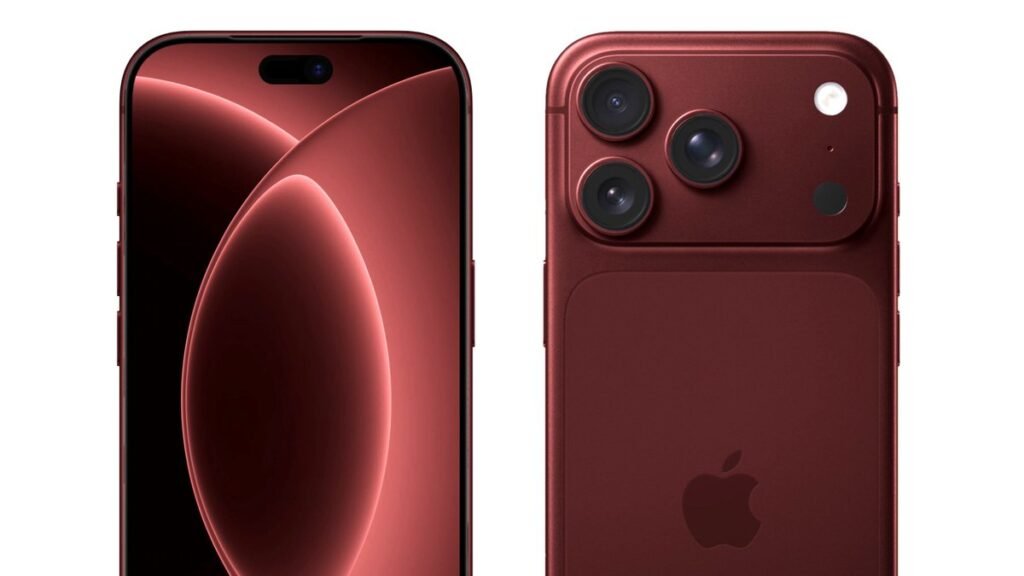
Based on current information, the iPhone 18 Pro looks like a refinement-focused release that pushes Apple closer to its long-term goals: an all-screen iPhone, better imaging flexibility, and more efficient silicon.
Here’s a clean breakdown of what we know so far and why it matters.
Under-display Face ID Finally Arrives
One of the most significant changes is the move to under-display Face ID components.
What’s expected:
- Face ID sensors placed beneath the display
- Front camera positioned at the top-left corner
- Cleaner, less intrusive front design
This change reduces visual clutter and is a major step toward a fully uninterrupted display. It also signals Apple’s confidence in under-display biometric accuracy, something it has taken years to adopt.
Dynamic Island Shrinks by 35%
With Face ID hardware moving under the panel, the Dynamic Island is set to get noticeably smaller.
Key details:
- Size reduction from ~20.76mm to ~13.49mm
- Same Dynamic Island functionality retained
- More usable screen space, especially for media
This keeps Apple’s software features intact while improving aesthetics and immersion.
Brighter, More Efficient OLED Panel
Apple is reportedly introducing a next-generation OLED display that focuses on efficiency as much as brightness.
Expected benefits:
- Higher peak brightness
- Improved outdoor visibility
- Better power efficiency
This matters because Apple is pairing the display upgrade with a larger battery, aiming for longer screen-on time without increasing heat or power drain.
Larger Battery on eSIM-Only Models
Battery capacity is also getting a meaningful boost, at least on certain variants.
What’s reported:
- Around 5,200mAh battery on eSIM-only models
- Slightly thicker and heavier chassis
- Estimated weight increase of ~10 grams
This suggests Apple is prioritizing endurance, especially for users who rely heavily on 5G, navigation, and camera usage.
Variable Aperture Comes to the Main Camera
Apple may finally introduce variable aperture control on the primary camera.
Why this matters:
- Better depth-of-field control
- Improved low-light performance
- More natural background blur without heavy processing
This brings DSLR-like flexibility to mobile photography and gives users more creative control beyond computational effects.
Teleconverter Support for Advanced Zoom
Alongside variable aperture, Apple is reportedly adding teleconverter-style support.
Expected impact:
- Enhanced optical zoom flexibility
- Improved long-range photography
- More consistent results across lighting conditions
This move targets creators and mobile photographers who want precision rather than just higher megapixel counts.
A20 Chip Built on 2nm Process
At the core of the iPhone 18 Pro is Apple’s next-generation silicon.
Chip details:
- A20 processor
- Built on a 2nm manufacturing process
- Higher performance with lower power consumption
This will directly benefit gaming, AI features, camera processing, and battery life.
Apple C2 Modem
Apple is also expected to debut its new in-house C2 modem.
What to expect:
- Improved 5G efficiency
- Better signal stability
- Reduced reliance on third-party modem suppliers
This is another step toward tighter hardware-software integration.
Why the iPhone 18 Pro Matters
The iPhone 18 Pro isn’t about dramatic design changes. It’s about refinement where it counts:
- Less intrusive front display
- Better battery life
- More control over photography
- Faster, more efficient performance
For users who value reliability, longevity, and practical upgrades, this could be one of Apple’s most balanced Pro iPhones yet.
Leave a Reply