ChatGPT has started rolling out a limited advertising test to a small group of Free and Go users in the United States. This marks the first structured experiment with ads inside the ChatGPT experience, and OpenAI is being explicit about how it works, what changes, and what does not.
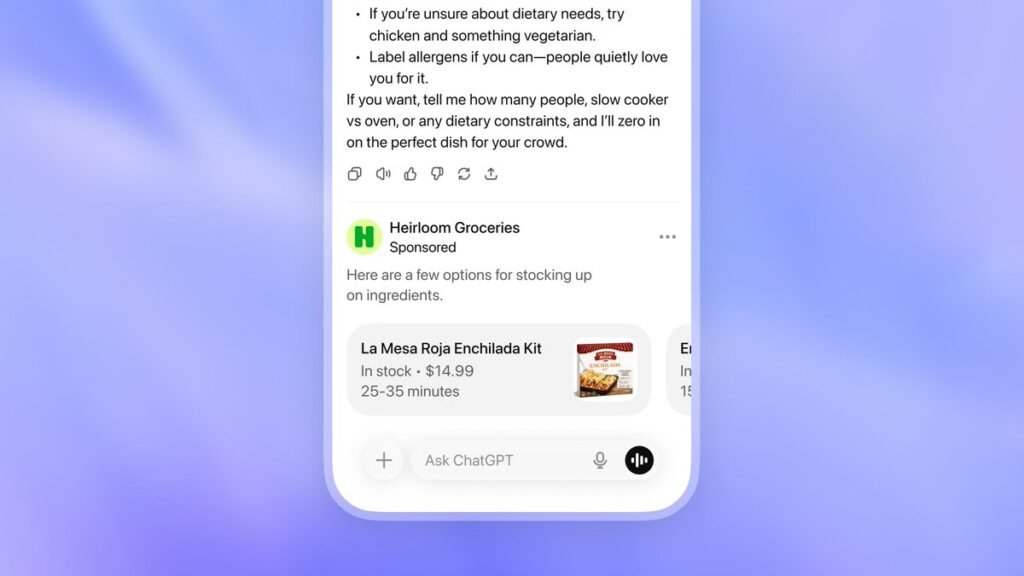
The key message is simple: ads do not affect ChatGPT’s answers.
They are clearly labeled, visually separated from responses, and designed to support continued free access without compromising trust, privacy, or usefulness.
What’s changing with this test:
- Ads are being shown to a subset of Free and Go users in the U.S.
- Ads appear as clearly labeled sponsored content
- Ads are visually separated from ChatGPT’s responses
- ChatGPT’s answers remain independent and unbiased
This is a test phase, not a full rollout.
Why OpenAI is testing ads now:
ChatGPT is used by hundreds of millions of people for learning, work, research, and everyday decisions. Keeping the service fast, reliable, and available at low or zero cost requires ongoing infrastructure investment.
Ads are being explored as a way to:
- Maintain free and low-cost access with fewer usage limits
- Fund continued improvements to models and performance
- Support broader global availability over time
Users who prefer not to see ads still have options.
Your choices as a user:
- Upgrade to Plus or Pro to avoid ads
- Stay on Free tier and opt out of ads in exchange for fewer daily messages
- Dismiss ads, give feedback, or manage ad preferences at any time
Control stays with the user.
How ads are selected during the test:
Ads are matched based on:
- The topic of your current conversation
- Your past chats and interactions with ads
- Relevance to what you’re actively exploring
For example:
- Researching recipes may surface meal kit or grocery ads
- Exploring tools may surface relevant software services
If multiple advertisers qualify, the most relevant one is shown first.
What advertisers do not get access to:
- Your chat content
- Your chat history
- Your memories
- Your personal identity or details
Advertisers only see aggregated performance data, such as impressions or clicks.
Privacy and safety guardrails in place:
- No ads shown to users under 18
- No ads near sensitive or regulated topics, including:
- Health
- Mental health
- Politics
- Narrow or invasive targeting is restricted
- Advertiser access is curated to reduce scams and misleading content
These safeguards are central to how the program is designed.
🚀 Need a Shopify Store That Converts?
I build fast, clean Shopify stores for DTC brands that want more sales, not just a pretty site.
Why ads may actually feel different in ChatGPT:
People often use ChatGPT when they are:
- Comparing options
- Researching solutions
- Working toward a decision
In that context, relevant ads can function more like helpful discovery tools rather than interruptions. OpenAI says the goal is to make ads feel additive, not disruptive.
What this test is really about:
Learning.
OpenAI is monitoring:
- User feedback
- Ad relevance
- Experience quality
- Trust signals
Expansion will only happen if ads prove useful without degrading the core experience.
For businesses:
Advertising inside ChatGPT is still in its early stages. Over time, OpenAI plans to explore:
- New ad formats
- Different objectives and buying models
- More interactive ways for businesses to connect with users
Interested businesses can register for updates via OpenAI’s advertiser program.
What remains unchanged:
- ChatGPT’s answers stay independent
- Conversations remain private
- Users retain meaningful control
Ads may be new, but the fundamentals are not changing.
Leave a Reply