YouTube is continuing a notification experiment that could significantly reduce how many subscribers actually see alerts for new uploads — even when notifications are turned on.
This isn’t a bug.
It’s an intentional system-level change.
And for creators who rely on notification traffic, the impact is real.
What YouTube is testing
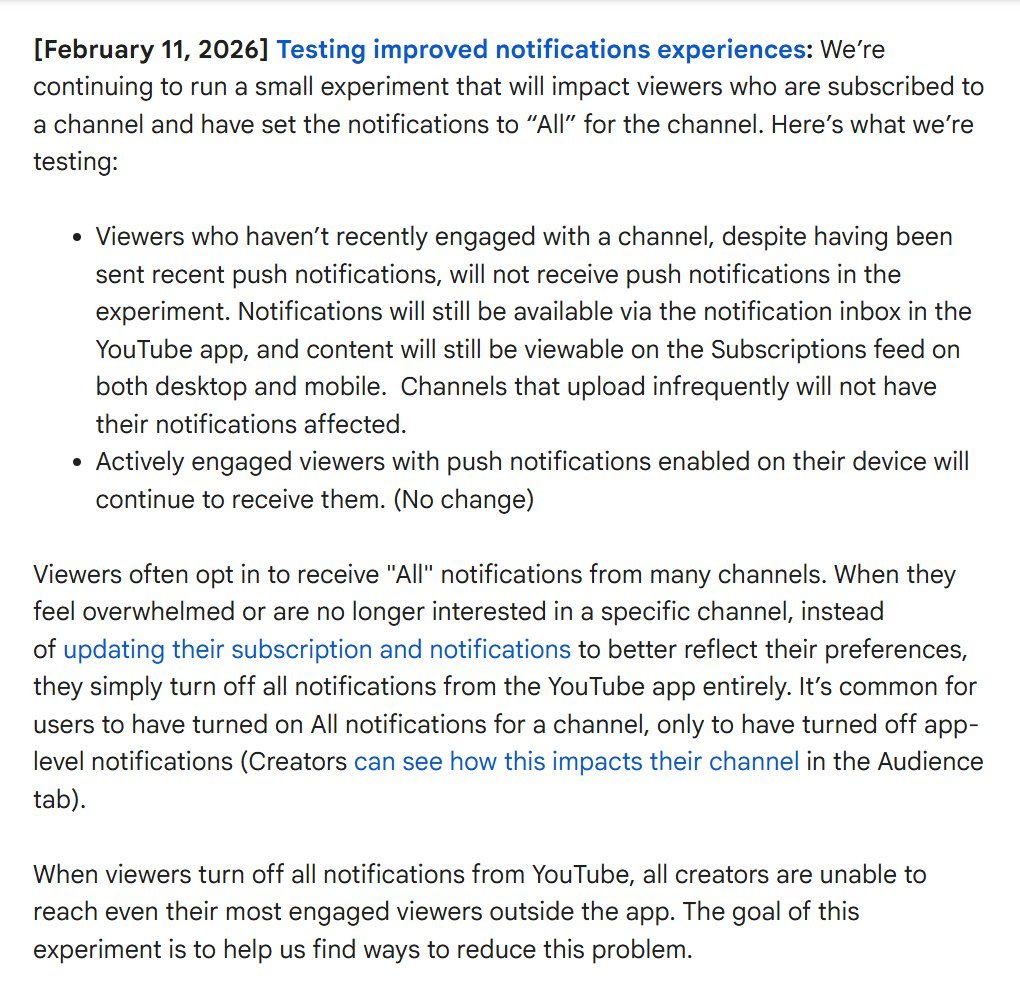
Since 2025, YouTube has been running a test that selectively suppresses push notifications for certain subscribers.
Here’s the key condition:
- If a subscriber has “All notifications” enabled
- But hasn’t watched your videos recently
YouTube may stop sending them push notifications entirely.
No unsubscribe.
No warning.
No change visible to the user.
Your video simply doesn’t reach their phone.
What this means in practice
A subscriber can still be:
- Subscribed to your channel
- Set to “All” notifications
- Logged into YouTube regularly
And still not receive notifications for your uploads.
From the creator’s side, everything looks normal.
From the viewer’s side, notifications silently disappear.
Why YouTube is doing this
The reasoning is behavioral, not technical.
YouTube has identified a pattern:
- Many users enable “All” notifications for dozens of channels
- Over time, they stop actively watching most of them
- Their phone becomes overloaded with alerts
- Instead of disabling individual channels, they turn off all YouTube notifications
That’s a worst-case outcome for YouTube.
To prevent users from globally disabling notifications, YouTube is choosing to:
- Reduce notifications sent to inactive subscribers
- Preserve notifications only for channels a user actively watches
The goal is to keep YouTube notifications enabled overall — even if that means fewer alerts per channel.
Why this hurts creators
Most channels have a large group of passive subscribers.
These viewers:
- Watch occasionally
- Skip some uploads
- Still care about the channel
- Often rely on notifications to re-engage
Under this test, those subscribers are the first to lose notifications.
That creates a gap:
- Active fans keep getting alerts
- Casual but interested viewers quietly disappear from notification reach
For creators, this can lead to:
- Lower notification CTR
- Slower initial velocity on uploads
- Less predictable launch performance
And because notifications influence early engagement, that can ripple into recommendation performance.
🚀 Need a Shopify Store That Converts?
I build fast, clean Shopify stores for DTC brands that want more sales, not just a pretty site.
Important clarification
This is still a test, not a universal rule.
Key points to know:
- It is not fully rolled out
- It does not affect every channel
- It may vary by region, account, or usage pattern
YouTube has confirmed the behavior publicly in support discussions, including this official thread:
https://support.google.com/youtube/thread/18138167
What creators should take away
The signal is clear:
- Notifications alone are no longer guaranteed reach
- Subscriber count ≠ notification delivery
- Engagement consistency matters more than ever
If a viewer doesn’t regularly watch, YouTube may decide your notifications aren’t worth sending — even if the viewer never opted out.
This pushes creators to focus on:
- Strong hooks that pull viewers back organically
- Thumbnails and titles that win homepage traffic
- Building habits, not just subscriptions
The bigger shift
YouTube is prioritizing viewer experience over creator reach.
Not because creators don’t matter — but because burned-out users stop engaging entirely.
This test reflects a platform reality:
- Notifications are becoming earned, not guaranteed
- Activity beats intent
- Engagement history outweighs settings
For creators, the strategy stays the same:
- Win the click
- Win the watch
- Stay relevant
Because on modern YouTube, silence doesn’t mean unsubscribed — it means filtered.
Leave a Reply