A new hands-on look at Samsung’s next Ultra flagship is giving a clearer picture of what the Galaxy S26 Ultra is prioritizing this year.
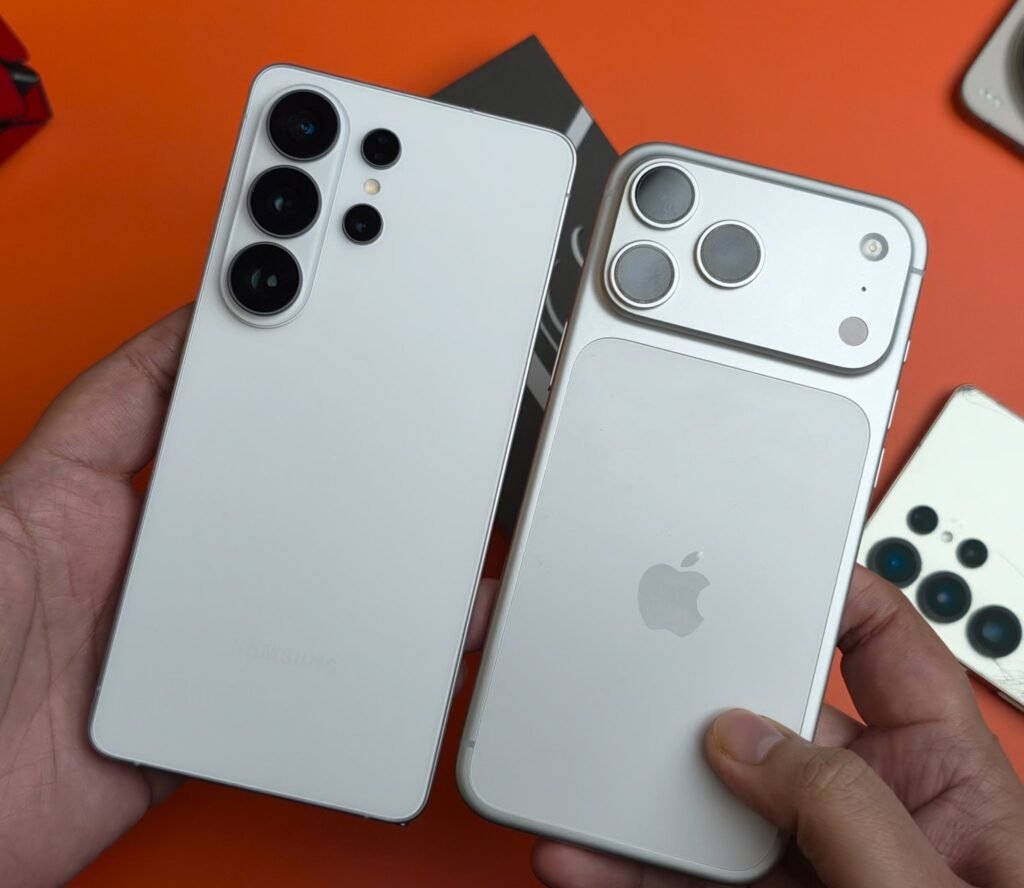
The device appears to focus on display refinement, camera consistency, and peak chipset performance rather than dramatic hardware changes. Early visuals suggest Samsung is doubling down on the formula that defined recent Ultra models while polishing key details.
The biggest visual shift is happening on the front.
Display direction:
• Large 6.9-inch panel continues the Ultra size approach
• Flat 2K M14 display instead of curved edges
• Extremely thin and symmetrical bezels across all sides
• Focus on usability, stylus comfort, and durability
A flat Ultra display signals Samsung’s ongoing move away from aggressive curves, especially for productivity and gaming scenarios.
Camera hardware remains one of the defining pillars of the Ultra line.
Reported camera setup:
• 200MP HP2 primary sensor stays as the main imaging engine
• 50MP ultrawide camera for landscape and macro flexibility
• 10MP 3× telephoto for mid-range zoom
• 50MP 5× periscope camera for long-range photography
The configuration suggests continuity rather than reinvention, but improvements are expected in image processing, AI enhancement, and video stabilization.
Samsung’s strategy appears focused on refining an already mature camera stack instead of chasing new sensor categories.
Performance is expected to be among the biggest upgrades.
Chip and performance highlights:
• Snapdragon 8 Elite high-frequency variant rumored
• Clock speeds reportedly reaching around 4.7GHz
• Emphasis on sustained performance for gaming and AI workloads
• Potential efficiency gains through improved thermals
Higher-frequency bins typically target flagship differentiation, giving the Ultra stronger peak performance compared to other models in the lineup.
Battery capacity, however, may remain unchanged.
Power details:
• 5000mAh battery expected again
• Charging improvements may rely on efficiency rather than size increase
• Software optimization and chip efficiency likely key factors
• Continued balance between weight, thickness, and battery life
In a market where some competitors are moving toward larger batteries, Samsung maintaining the same capacity reflects a different philosophy — focusing on optimization instead of raw numbers.
🚀 Need a Shopify Store That Converts?
I build fast, clean Shopify stores for DTC brands that want more sales, not just a pretty site.
What this direction suggests:
• Samsung sees the Ultra formula as stable and proven
• Display usability is becoming a priority over visual curvature
• Camera consistency helps software improvements compound year over year
• Performance differentiation is shifting toward chip tuning
• Battery strategy is leaning on efficiency rather than expansion
This pattern mirrors broader flagship trends where incremental internal improvements replace dramatic spec jumps.
For users, the practical impact may include:
• More comfortable everyday use due to flat display
• Better zoom consistency across multiple focal lengths
• Faster AI processing and gaming stability
• Similar battery endurance with improved efficiency
• Stronger longevity through iterative refinement
The Ultra remains positioned as Samsung’s most complete device rather than its most experimental one.
These details come from early hands-on information and could change before launch, but the overall direction is clear: stability, performance tuning, and camera maturity define this cycle.
Instead of redefining the category, the Galaxy S26 Ultra appears built to reinforce Samsung’s flagship baseline for 2026.
Leave a Reply