Google has officially revealed the Android 17 logo, giving the first visual signal of where the next Android generation is headed. While it’s just a logo, Android branding has historically reflected deeper shifts in design language, UI direction, and platform personality.
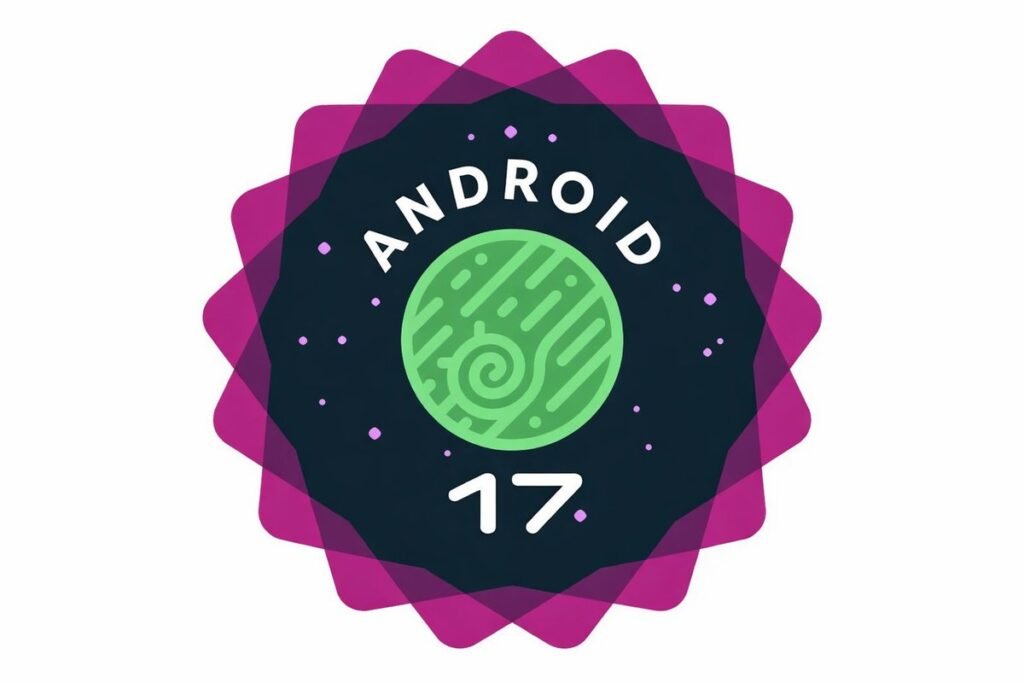
This year’s logo points to refinement rather than disruption.
The Android 17 mark builds on recent design trends while adding more depth, contrast, and character than Android 16.
What the Android 17 logo looks like
The new logo introduces a layered, more dimensional visual identity.
Key design elements include:
- A purple layered star badge forming the outer shape
- A dark circular core anchoring the center
- A green, planet-like swirl inside the core
- Clean, minimal “17” typography that stands out clearly
The result is a logo that feels modern, playful, and intentionally tactile, with more visual depth than last year’s flatter approach.
What’s changed compared to Android 16
Android 16 leaned toward simplicity and flatter elements.
Android 17 shifts slightly in the opposite direction:
- More layering and depth, instead of flat shapes
- Stronger color contrast using dark and neon-like accents
- A design that feels more iconic and badge-like, not just symbolic
This suggests Android branding is moving toward visuals that work better across wallpapers, onboarding screens, splash animations, and marketing assets.
Why Google cares about the logo
For Google, the Android logo isn’t just decoration.
It sets expectations for:
- System UI polish
- Animation style and visual hierarchy
- How Android presents itself across phones, tablets, foldables, and wearables
Over the past few versions, Google has aligned Android branding more closely with Material You, expressive motion, and personalization. The Android 17 logo fits neatly into that direction.
What this hints about Android 17 as a platform
While the logo doesn’t confirm features, it often mirrors platform philosophy.
This design points to a few likely themes:
- Refinement over reinvention
- Stronger focus on visual consistency across devices
- Emphasis on depth, motion, and responsiveness rather than radical UI changes
In short, Android 17 is shaping up to be a version that polishes what already works, rather than introducing disruptive design resets.
🚀 Need a Shopify Store That Converts?
I build fast, clean Shopify stores for DTC brands that want more sales, not just a pretty site.
What this hints about Android 17 as a platform
While the logo doesn’t confirm features, it often mirrors platform philosophy.
This design points to a few likely themes:
- Refinement over reinvention
- Stronger focus on visual consistency across devices
- Emphasis on depth, motion, and responsiveness rather than radical UI changes
In short, Android 17 is shaping up to be a version that polishes what already works, rather than introducing disruptive design resets.
Why this matters to users
For everyday users, branding changes usually translate into subtle but meaningful improvements.
What you’re likely to gain:
- A more cohesive visual experience across apps and system UI
- Cleaner animations that feel intentional, not flashy
- Better alignment between Android on phones, tablets, and future form factors
These are the kinds of updates that don’t scream “new” on day one, but make the OS feel more stable and pleasant over time.
Why this matters to developers and designers
For developers, a new logo signals a design checkpoint.
It’s often a cue to:
- Review app theming and dynamic color usage
- Prepare for UI tweaks tied to the next Material iteration
- Align branding assets with updated Android visuals
Design-led Android updates tend to reward apps that follow system conventions closely.
Big picture
The Android 17 logo confirms one thing clearly: Google isn’t trying to shock users this cycle.
Instead, it’s leaning into:
- Visual maturity
- Consistency
- A more dimensional, expressive identity
That approach reflects where Android is today—a stable, widely adopted platform focused on polish, performance, and long-term usability.
Leave a Reply