- Apple has introduced a new age verification requirement for users in the UK through iOS 26.4 developer beta.
- The change aligns with the country’s Online Safety Act, which places stricter responsibility on platforms around age-appropriate access.
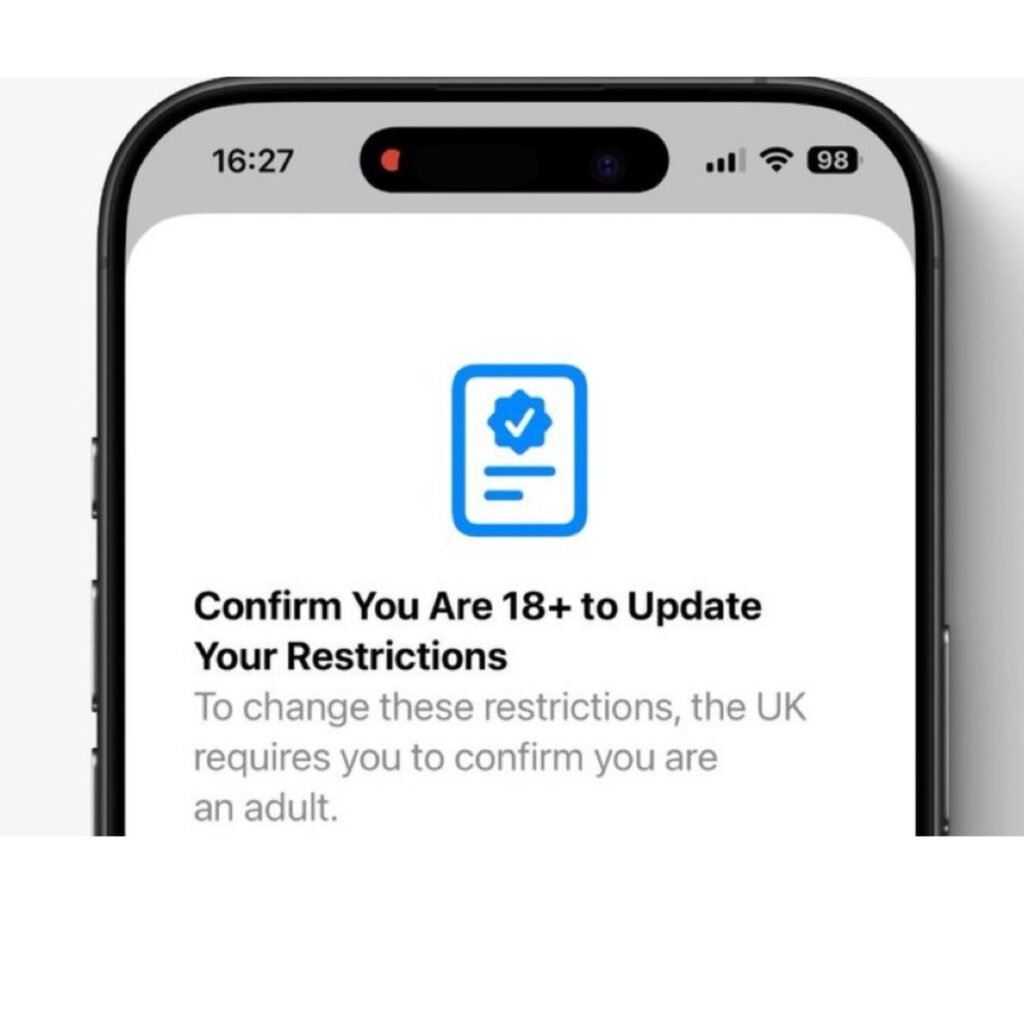
The update affects how users download apps, make purchases, and access certain services.
What the new age verification does
UK iPhone users running the beta are now seeing a prompt inside Settings asking them to confirm they are 18 or older.
Key behaviour reported:
- Verification appears automatically after updating
- Many users complete the process within seconds
- Some accounts require additional confirmation steps
- Verification status links directly to App Store permissions
The system acts as a gate rather than a one-time informational check.
How verification works
Apple appears to be using multiple methods to confirm age without forcing every user into manual ID checks.
Possible flows include:
- Automatic verification using existing account signals
- Credit card verification when automated checks are insufficient
- Identity document scanning in certain cases
- On-device processing designed to limit data exposure
The process typically finishes quickly, but the fallback methods ensure compliance if signals are unclear.
Restrictions if verification is skipped
The change has functional consequences for users who do not complete verification.
Reported limitations:
- Unable to download new apps
- App purchases blocked
- In-app purchases disabled
- Access to certain content categories is restricted
This effectively makes age confirmation mandatory for normal App Store usage in the UK.
Why Apple is doing this
The rollout reflects growing regulatory pressure on platform operators to verify user age rather than relying on self-declared birthdays.
Broader drivers:
- Enforcement of the UK Online Safety Act
- Increased scrutiny on app marketplaces
- Child safety requirements across digital services
- Pressure on large tech companies to standardise safeguards
Apple’s approach suggests verification could become infrastructure rather than an optional feature.
Privacy considerations
Apple historically positions age checks around minimal data sharing.
Observed direction:
- Verification attempts to reuse existing account signals first
- Additional checks appear conditional, not universal
- Processing likely occurs on the device where possible
- Apple does not need to store full identity documents permanently
This balances compliance with the company’s privacy messaging.
What this means for users
For UK users, the App Store experience becomes more controlled.
Practical impact:
- Faster approval for adult users once verified
- Reduced access friction for age-appropriate content
- Additional step when setting up new devices
- Possible delays if identity verification is required
For parents, it may simplify the enforcement of age restrictions without manual configuration.
🚀 Need a Shopify Store That Converts?
I build fast, clean Shopify stores for DTC brands that want more sales, not just a pretty site.
What does this signal globally
Regulation-driven features often expand beyond initial markets.
Potential next steps:
- Similar prompts in EU regions
- Integration with parental control frameworks
- Verification tied to Apple ID creation
- Expanded age tiers instead of only 18+ confirmation
Age verification may become a standard onboarding layer across platforms.
Developer beta context
Because this appears in a developer beta, implementation details may evolve before public release.
Still, the inclusion indicates:
- Apple is preparing its infrastructure early
- Compliance timelines are approaching
- App distribution rules may tighten
- Developers may need to account for age-gated flows
The App Store experience is gradually shifting from open access to regulated access.