- Next-generation smartphone storage technology is moving into evaluation stages.
- UFS 5.0 is currently being tested by manufacturers as the successor to today’s UFS 4.0 and 4.1 storage standards.
- Early technical details point to significantly higher bandwidth designed for future performance-heavy mobile workloads.
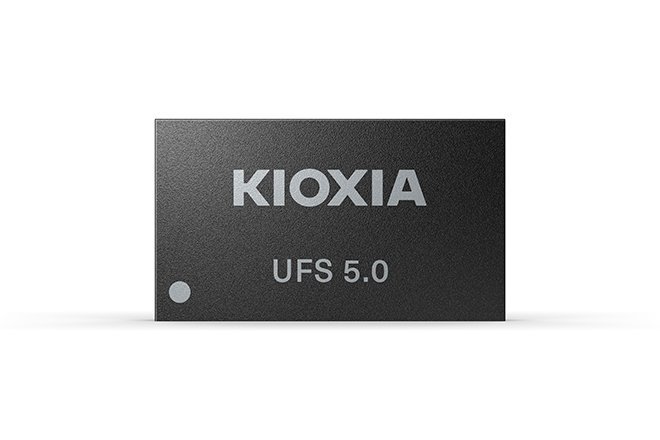
The shift focuses less on everyday speed boosts and more on preparing devices for large data processing, AI tasks, and advanced media capture.
• Bandwidth jump compared to current phones
Existing flagship smartphones using UFS 4.x typically operate in the ~4 GB/s performance class.
Early UFS 5.0 expectations:
- Theoretical bandwidth approaching ~10.8 GB/s
- Roughly double the available data throughput
- Improved sustained performance under heavy workloads
This increase targets scenarios where storage speed becomes a bottleneck rather than simple app launches.
• Real-world impact will be specific, not universal
Higher bandwidth does not automatically translate into phones feeling twice as fast in daily use.
Where improvements are expected:
- Large file transfers between storage and memory
- Continuous high-resolution video recording stability
- Faster loading of heavy games and professional apps
- Better handling of on-device AI models and datasets
Routine actions like messaging or scrolling will see limited visible change.
• Why storage speed matters more now
Smartphone workloads are expanding beyond traditional app usage.
Modern devices increasingly rely on:
- On-device AI processing
- Computational photography pipelines
- High-bitrate 4K and 8K video workflows
- Large game assets and real-time rendering
These tasks continuously read and write massive amounts of data, making storage throughput critical.
• AI is a key driver behind UFS 5.0
Local AI models require rapid movement of large files between storage, RAM and processors.
UFS 5.0 aims to support:
- Faster model loading
- Reduced delays in generative AI features
- More complex offline processing
- Improved multitasking with AI running in the background
This positions storage as part of the broader AI hardware stack alongside chips and memory.
• Current stage: evaluation, not consumer rollout
Manufacturers are working with early samples to validate performance, thermals and power efficiency.
🚀 Need a Shopify Store That Converts?
I build fast, clean Shopify stores for DTC brands that want more sales, not just a pretty site.
What this means:
- No immediate smartphone launches using UFS 5.0
- Testing focused on engineering prototypes
- Optimization required before mass production
Standards finalization and supply chain readiness typically take multiple product cycles.
• Expected timeline for adoption
Industry expectations suggest a gradual rollout rather than a sudden shift.
Likely progression:
- Late 2026 — prototype devices and internal testing
- Early flagship integration discussions after standardization
- Mainstream flagship adoption around 2027
This mirrors previous transitions between storage generations.
• What users should take away
UFS 5.0 represents infrastructure progress rather than a visible feature upgrade.
Key implications:
- Phones built for heavier workloads and AI features
- More reliable high-resolution video capture
- Future-proofing for large apps and datasets
- Performance consistency under sustained load
The upgrade focuses on enabling new capabilities rather than making current usage dramatically faster.