WhatsApp is working on a long-requested feature that could change how people communicate across time zones, work groups, and reminders.
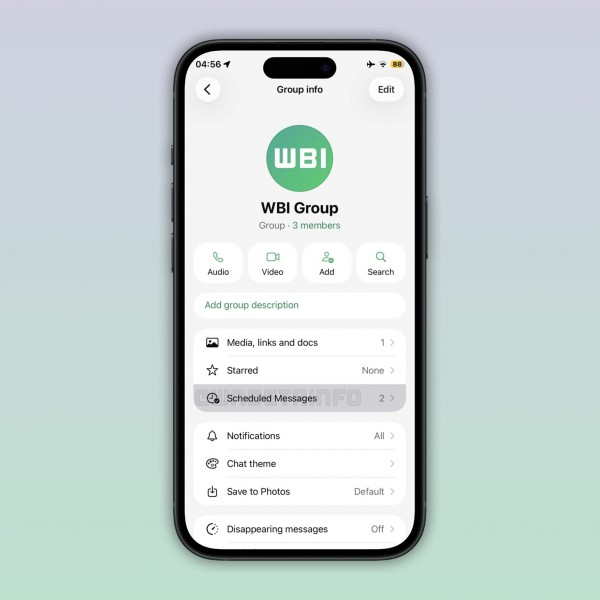
Early builds of the iOS beta suggest message scheduling is under development, allowing users to send texts automatically at a chosen time instead of manually posting them.
The feature was discovered inside a recent beta version, indicating active testing but not immediate availability.
What the feature is expected to do:
• Allow users to write a message and choose a future date and time
• Work in both individual conversations and group chats
• Store scheduled texts inside a dedicated management section
• Automatically send the message at the selected time
The goal is to reduce missed messages, late replies, and manual follow-ups.
A new “Scheduled Messages” area appears to be part of the experience.
How that section could function:
• View all pending scheduled texts in one place
• Edit or delete scheduled messages before they are sent
• Reschedule delivery timing
• See confirmation when a message is automatically delivered
This brings WhatsApp closer to productivity tools rather than purely real-time messaging.
The timing of this feature reflects broader messaging trends.
Across major apps, scheduling has become important for:
• Remote teams coordinating across time zones
• Businesses sending reminders or announcements
• Creators managing community updates
• Personal users scheduling birthday or event messages
Instead of relying on notes or alarms, communication can be automated directly inside the chat.
Practical use cases where scheduling matters:
• Sending meeting reminders early morning
• Posting group announcements at fixed times
• Delivering campaign messages for communities
• Planning follow-ups without staying online
• Avoiding late-night notifications for recipients
The feature improves control over when conversations happen.
Privacy and reliability considerations are likely part of development.
Expected behavior:
• Messages remain end-to-end encrypted
• Scheduling happens locally until delivery
• Users retain full control to cancel before send
• No message is visible to others until the scheduled time
This keeps the experience consistent with WhatsApp’s security model.
The presence in beta indicates internal testing rather than imminent rollout.
🚀 Need a Shopify Store That Converts?
I build fast, clean Shopify stores for DTC brands that want more sales, not just a pretty site.
What that means for users:
• Features may change before release
• UI and controls could evolve
• Rollout may begin with limited regions
• Android testing may follow later
WhatsApp often refines productivity features across multiple beta cycles before public release.
From a platform strategy perspective, scheduling reduces one of messaging’s biggest limitations — dependence on real-time availability.
Key impact:
• Conversations become asynchronous
• Groups operate more predictably
• Communication becomes less interrupt-driven
• Users gain planning capabilities without extra apps
This aligns with WhatsApp’s recent focus on communities, channels, and structured messaging.
If released broadly, message scheduling would remove the need for workarounds like draft messages, reminders, or third-party tools.
For everyday users, the benefit is simple: send the right message at the right time without being online.
That small shift changes how messaging fits into daily workflows.
Leave a Reply